Home About Paul Conditions Testimonials Case Studies BOOK A CONSULTATION
The Problem The Size Problem What Works The Unit Shoemaker Lab Data How To Use FAQ BOOK NOW

Clinical Resource · 8 min read · Updated April 2026

Air filtration in mould recovery.

You've found the leak. You've taken the binders. You've worked with someone who actually understands mould. And you're still flaring.

The piece most people miss is the air they're still breathing.

A clinical resource for UK and Ireland clients in active mould and mycotoxin recovery.

BOOK A CONSULTATION
BANT & CNHC Registered
Online UK & Ireland
Works Alongside Your GP
15+ Years Clinical Practice
Best Nutritionist Hereford 2025
Affiliate disclosure: This page links to a unit Paul personally uses and recommends to clients in active mould recovery — the iAdaptAir 2.0 by Air Oasis. Purchases made through the link give you a 10% discount and the clinic a small commission at no additional cost to you. The recommendation reflects clinical use, not commercial incentive.

You've done the work. So why are you still flaring?

The clients who come to this clinic with mould-related illness have usually done a great deal of the work already. They've identified the source — a roof leak, a flooded basement, a damp rental, a building that turned out to be sicker than it looked. They've remediated, or moved out, or both. They've worked with practitioners who actually understand the picture. They've taken binders. They've supported their methylation. They've cleared what could be cleared.

And in some cases, the recovery is slower than expected. Symptoms drop a level, then plateau. New flares appear without obvious triggers. Mornings feel worse than nights. The body keeps responding as if it is still encountering the thing it is supposedly clear of.

One of the most common explanations for this pattern is the air. Not the air in the building that caused the original injury — the air in the new, supposedly clean environment. Spores travel on shoes, on clothes, in HVAC ducts, on furniture. Mycotoxin-bound dust can persist in soft furnishings long after a building has been declared remediated. And in shared housing, in flats with neighbours, in older buildings of any kind in the UK and Ireland, the indoor air contains a baseline level of biological exposure that a sensitised person continues to react to.

The clients who plateau in their recovery are often the ones whose sleeping environment has not been addressed. The body cannot regulate inflammation while it is being re-challenged eight hours a night, every night, by the air it is breathing.
Clinical context

Air filtration is not a treatment for mould-related illness. It is one component of the broader environmental and clinical work that sits alongside the medical care many of our clients are receiving from their GP, immunologist or specialist consultant. The two disciplines are answering different questions about the same body — and on this particular question, the air the body is breathing is part of the answer.

Active recovery support
If your recovery has plateaued, the next step is understanding why.
BOOK A CONSULTATION

Why ordinary HEPA isn't enough.

Most air purifiers sold for mould use HEPA filtration. HEPA captures particles down to 0.3 microns under the standard specification, or 0.05 microns under the H13 medical-grade specification. Mould spores fall comfortably inside that range. A good HEPA filter traps mould spores effectively.

The problem is mycotoxins. Mycotoxins are not spores — they are toxic molecular compounds produced by certain mould species. They are roughly 1 to 10 nanometres in diameter — between 50 and 100 times smaller than the smallest particle a HEPA filter can reliably hold. They pass through HEPA mesh the way a marble passes through a chain-link fence.

This is why some people with significant mycotoxin exposure feel no improvement from a HEPA-only purifier even when it is running well. The spore count drops. The toxin load does not.

Particle size — logarithmic scale (1 nm to 10 μm)
1 nm 10 nm 100 nm 1 μm 10 μm
Mycotoxin
1–10 nm
passes through
H13 HEPA captures
≥ 50 nm
filter zone
Standard HEPA captures
≥ 0.3 μm
filter zone
Mould spore
2–10 μm
caught

Mycotoxins sit at 1–10 nanometres — well below the H13 HEPA capture floor of 50 nanometres. Filtration alone cannot capture them. They have to be broken down by active oxidation (PCO/AHPCO).

What works on molecules of this size is not filtration but active oxidation — a process that breaks down the molecule itself rather than trying to trap it. The most established version of this in consumer air purifiers is photocatalytic oxidation (PCO), and its more advanced sibling, AHPCO. PCO uses UV light and a catalyst (typically titanium dioxide) to generate hydroxyl radicals, which then oxidise organic compounds — including mycotoxins, VOCs, and bacterial cell walls — at the molecular level.

This is the technology that has to sit alongside HEPA in any unit being seriously used in mould recovery. HEPA captures the spore. PCO breaks down the toxin. Both are needed.

Five stages, working together.

The unit Paul recommends to clients runs the air through five distinct stages of filtration and oxidation. Each addresses a different part of the contaminant spectrum. The combination is what matters — no single stage handles everything.

1
H13 Medical-Grade HEPA
Captures particles down to 0.05 microns — mould spores, dust, dander, pollen, bacteria, larger viral particles. The foundation layer.
2
Activated Carbon
Adsorbs gas-phase contaminants — VOCs, formaldehyde, off-gassing from new furniture or building materials, smoke, household chemicals, odours.
3
Silver Antimicrobial Layer
Inhibits microbial growth on the filter media itself, extending filter life and preventing the unit from becoming a microbial reservoir over time.
4
Bipolar Ionisation
Generates positive and negative ions that cluster around airborne particles, increasing their effective size and helping filtration capture them.
5
AHPCO Photocatalytic Oxidation — the mycotoxin layer
UV-activated titanium dioxide generates hydroxyl radicals that break down molecular-scale contaminants — mycotoxins, VOCs, bacterial cell walls, viral protein structures. This is what HEPA on its own cannot do, and the reason this unit sits inside clinical recommendations rather than beside ordinary HEPA-only purifiers.
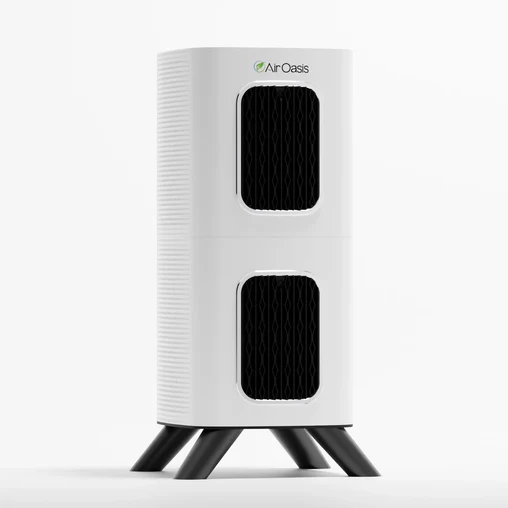
Air Oasis iAdaptAir 2.0 Medium air purifier — the unit Paul Foley uses and recommends to clients in active mould recovery
The Unit Paul Recommends

iAdaptAir 2.0 Medium

Five-stage filtration with H13 HEPA and AHPCO photocatalytic oxidation. The unit Paul personally uses at home and recommends to clients in active mould recovery.

£451
— or £394.59 with optional filter subscription & lifetime warranty
Free shipping to UK & Ireland · 60-day satisfaction guarantee
VIEW ON AIR OASIS — 10% OFF 10% discount applied automatically through the clinic referral link.
Coverage
530 sq ft
5 air exchanges per hour
CADR
353 CFM
Max 353 / Low 178
Noise (Low)
25 dB
Quieter than a whisper
Ozone
None
Intertek validated · EN 1822 compliant
The CIRS Reference Standard

iAdaptAir is the first and last word in restoration and then maintenance of indoor air health. It quietly takes care of endos, actinos, MVOCs, and particulates down to 0.05 microns. I have four units for home and office.

Dr Ritchie Shoemaker, MD Foundational researcher in biotoxin-related illness (CIRS) · Author of Surviving Mold

Dr Shoemaker is the figure who established the modern clinical framework for water-damaged building exposure and chronic inflammatory response syndrome. His protocol is the reference standard CIRS-aware practitioners around the world build their work on. An endorsement of this kind, from this person, is the strongest single reason this unit sits inside the clinical conversation rather than beside it.

Tested against the species you actually fear.

Most air purifier marketing says "removes mould." Few brands test against the specific species that matter to people recovering from water-damaged buildings. The iAdaptAir was tested by an accredited third-party laboratory against the five species the recovery community pays most attention to.

Independent Third-Party Lab Testing

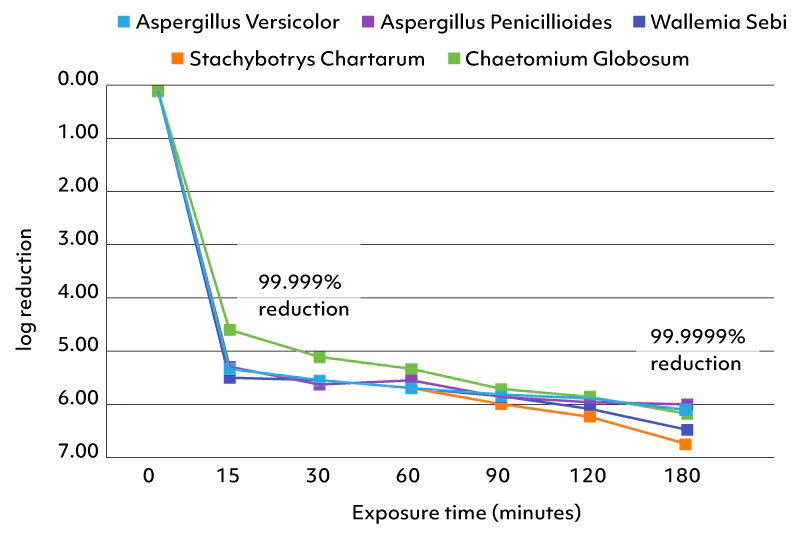
Mould species — log reduction over exposure time

Stachybotrys chartarum Aspergillus versicolor Aspergillus penicillioides Chaetomium globosum Wallemia sebi
Log reduction chart: the iAdaptAir 2.0 reducing Stachybotrys chartarum, Aspergillus versicolor, Aspergillus penicillioides, Chaetomium globosum and Wallemia sebi by 99.999% at 30 minutes and 99.9999% at 180 minutes in third-party laboratory testing

Laboratory data: 99.999% reduction at 30 minutes, rising to 99.9999% at 180 minutes across all five species under controlled chamber conditions. Real-world reduction depends on room size, air exchange rate, source load, ventilation and humidity. Lab data is a ceiling, not a guarantee — but the species named are the ones the recovery community pays attention to, and the unit was tested specifically against them.

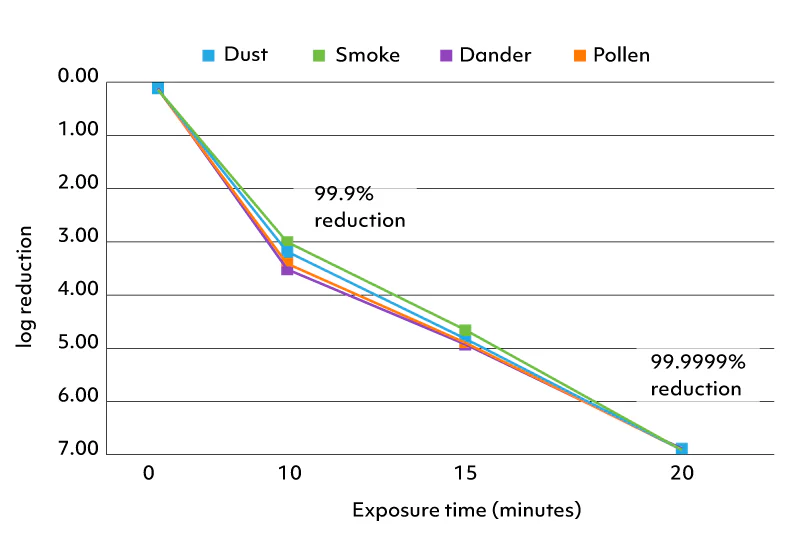
Allergens — dust, smoke, dander, pollen
99.9999% at 20 min
Log reduction chart: the iAdaptAir 2.0 reducing dust, smoke, dander and pollen by 99.9% at 10 minutes and 99.9999% at 20 minutes in laboratory testing

Mast-cell-activated and histamine-prone clients often respond to ambient particle reduction beyond the mould layer alone.

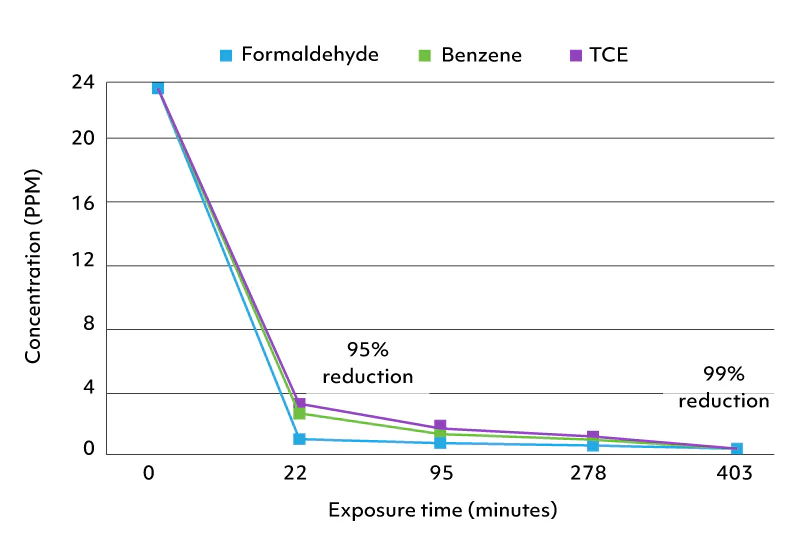
VOCs — formaldehyde, benzene, TCE
99% at 403 min
VOC concentration reduction chart: the iAdaptAir 2.0 reducing formaldehyde, benzene and TCE by 95% at 22 minutes and 99% at 403 minutes in laboratory testing

Multiple chemical sensitivity is a frequent overlap with CIRS — VOC reduction matters for the chemically reactive subset of mould patients.

The Unit

If you've read this far, you understand why this one.

The 10% discount applies automatically through the clinic referral link. Free shipping to the UK and Ireland. 60-day satisfaction guarantee on every unit.

VIEW ON AIR OASIS — 10% OFF

Affiliate link · Paul personally uses and recommends this unit · No additional cost to you.

How to use it during recovery.

The unit only works if it is used in the right room, for enough hours, with the filter actually maintained. The clients who get the most out of this kind of investment do four things consistently.

01
Bedroom first
A typical adult spends 7 to 9 hours a night in one room. That makes the bedroom the highest-leverage placement in the whole house. The first unit goes there. Living-room placements come second.
02
Run continuously
Auto mode is fine. The 25-decibel low setting is quieter than typical room ambience and won't disturb sleep. Intermittent use will not give the air enough turnovers per hour to make a meaningful difference.
03
Replace the filter
Annually under normal use, sooner if the environment is heavily contaminated. The filter subscription option auto-ships replacements and extends the warranty to lifetime. Either route works — neglecting the filter does not.
04
Add a second unit when ready
Once the bedroom is stable, the main living area is the next priority. Two units rarely need to scale further than this for a typical UK or Irish family home — overspending on coverage is not the same as recovery.

What air filtration is and isn't.

This page is about one specific intervention. It is not the whole picture. Anyone selling an air purifier as the answer to mould-related illness is overselling. The honest version of the conversation is the one that names the limits.

This is the air piece. One part of recovery — not a substitute for the clinical work, the remediation, or the medical care.

Related case study → Fatigue recovery through mycotoxin identification — an example of how the air piece, the clinical investigation and the wider protocol fit together for a real client.

The Clinical Work
The air is one piece. The clinical investigation is what addresses the rest.
BOOK A CONSULTATION

Two columns. Read the one that matches.

This is for you if...

  • You've identified a past or current mould exposure and you are actively in recovery
  • You've been tested for mycotoxins, or your clinical picture matches mould-related illness
  • You have a current HEPA-only purifier and your symptoms haven't shifted
  • You have remediated the source — or moved out of it — and want to support the new environment
  • You have CIRS, are following Shoemaker-aligned care, or are familiar with the protocol
  • You are working with a practitioner and want a unit they can stand behind

This is not for you if...

  • There is active water damage in the building and remediation has not started
  • You are buying an air purifier as a replacement for clinical investigation
  • You want a quick fix rather than a part of a longer recovery process
  • You are looking for the cheapest option — there are cheaper HEPA units, but they will not address the mycotoxin layer
  • You haven't yet established whether mould is part of your picture — start with the consultation, not the purifier

How we work

Paul Foley is a registered nutritional therapist and functional medicine practitioner. He works with clients living with complex, chronic and unresolved presentations — including mould-related illness, mycotoxin exposure, CIRS, and the long-tail recovery that follows water-damaged-building exposure — alongside, not instead of, the medical care they receive from their GPs, immunologists and specialist consultants.

Nutritional therapy does not diagnose, treat or cure medical conditions. It investigates the nutritional, gut, metabolic, environmental and lifestyle drivers that influence how the body operates, and builds personalised protocols to support the body's own regulatory systems.

Every client's case is different. The recommendations on this page reflect clinical experience and the specific role air filtration can play during mould recovery — they are not a prediction of results for any other person, and they are not a medical claim about any product.

Registered with BANT · CNHC

The questions clients actually ask.

An H13 medical-grade HEPA filter captures airborne particles down to roughly 0.05 microns. Mould spores fall comfortably inside that range. Mycotoxins do not — they are roughly 1 to 10 nanometres, around 50 to 100 times smaller than the smallest particle a HEPA filter can reliably trap. Filtration alone cannot capture them. Active oxidation technology (PCO/AHPCO) is what works on molecules of that size.
Three reasons. First — independent third-party laboratory testing against the five mould species most relevant to indoor water-damaged buildings, with documented log-reduction over time. Second — the inclusion of AHPCO photocatalytic oxidation alongside H13 HEPA, which addresses the mycotoxin size problem that pure HEPA does not. Third — endorsement and use by Dr Ritchie Shoemaker MD, the foundational figure in CIRS research. Paul personally uses the unit and recommends it to clients in active mould recovery for these reasons.
No. Air filtration does not replace remediation. If there is active water damage or visible mould growth in the building, that is the priority. Filtration supports the air during and after remediation — and during recovery from past exposure once you are in a clean environment. It is one part of the picture, not a substitute for fixing the source.
The bedroom. Most adults spend 7 to 9 hours a night in a single room, which makes that room the highest-leverage exposure point in the entire home. A unit in the bedroom that runs continuously through the night does more for cumulative inhaled load than a unit in a living space used for 3 hours in the evening. Once the bedroom is settled, a second unit in the main living area is the logical next step.
Yes. The link to Air Oasis on this page is an affiliate link — if you purchase through it, the clinic receives a small commission and you receive a 10% discount that the manufacturer shares with you in exchange for the referral. Paul personally uses the unit and recommends it to clients in clinic. He would not recommend a unit he had not used himself. The affiliate arrangement does not change the cost to you.
Yes. Air Oasis ships to the United Kingdom and the Republic of Ireland with free shipping. Pricing displays in pounds for UK addresses and is settled in GBP at checkout. The 60-day satisfaction guarantee and warranty terms apply to UK and Ireland orders the same as to US orders.
Continuously. Running it on Auto allows the unit to adjust based on detected air quality. The 25-decibel low setting on the Medium model is quiet enough to sleep beside without disruption. Continuous operation is what allows the air to genuinely turn over multiple times per hour — intermittent use does not achieve this.
Yes — annually under normal use, sooner in heavily contaminated environments. Air Oasis offers an optional filter subscription that auto-ships replacement filters and extends the warranty to lifetime for as long as the subscription is active. The one-time purchase option includes a standard two-year warranty. Both routes are valid — the subscription is more economical over the long term but it is not required.
RECOVERY
The Next Step

Mould recovery is not a single intervention.

It is the air, the body, the environment, and the clinical work — running together.

If your recovery has plateaued, the consultation is where the rest of the picture gets investigated.

BOOK A CONSULTATION
  1. Brewer JH, Thrasher JD, Straus DC, Madison RA, Hooper D. Detection of mycotoxins in patients with chronic fatigue syndrome. Toxins. 2013;5(4):605–617. doi:10.3390/toxins5040605
  2. Brewer JH, Thrasher JD, Hooper D. Chronic illness associated with mold and mycotoxins: is naso-sinus fungal biofilm the culprit? Toxins. 2014;6(1):66–80. doi:10.3390/toxins6010066
  3. Shoemaker RC, House DE. Sick building syndrome (SBS) and exposure to water-damaged buildings: time series study, clinical trial and mechanisms. Neurotoxicol Teratol. 2006;28(5):573–588. doi:10.1016/j.ntt.2006.07.003
  4. World Health Organization. WHO guidelines for indoor air quality: dampness and mould. WHO Regional Office for Europe; 2009. who.int/publications/i/item/9789289041683
  5. Mendell MJ, Mirer AG, Cheung K, Tong M, Douwes J. Respiratory and allergic health effects of dampness, mold, and dampness-related agents: a review of the epidemiologic evidence. Environ Health Perspect. 2011;119(6):748–756. doi:10.1289/ehp.1002410
  6. Mo J, Zhang Y, Xu Q, Lamson JJ, Zhao R. Photocatalytic purification of volatile organic compounds in indoor air: a literature review. Atmos Environ. 2009;43(14):2229–2246. doi:10.1016/j.atmosenv.2009.01.034
  7. Pigatto PD, Spadari F, Meroni L, Guzzi G. Mycotoxin-related illnesses: clinical evidence and review. J Biol Regul Homeost Agents. 2017;31(3):559–567.
  8. EN 1822-1:2019. High efficiency air filters (EPA, HEPA and ULPA) — Part 1: Classification, performance testing, marking. European Committee for Standardization; 2019. cencenelec.eu
The information on this page is for general educational purposes and is not a substitute for personalised medical or clinical advice. PFoley Clinic is a complementary practice — it does not diagnose, treat or cure any medical condition. Air-filtration recommendations reflect clinical experience and product features supplied by the manufacturer, not medical claims. Anyone with significant respiratory, immune or chronic health concerns should remain under the care of their GP and relevant specialists. Air Oasis product claims and laboratory data referenced on this page are derived from manufacturer-supplied third-party testing — they describe device performance under controlled conditions and are not a guarantee of clinical outcome. The link to Air Oasis is an affiliate link.
Product imagery and laboratory data courtesy of Air Oasis. Used with permission as part of the manufacturer's affiliate programme.
Content reviewed by Paul Foley, BANT, CNHC · Last updated: April 2026